Finding a way back
In Luke 15, we find a powerful story about forgiveness: a wayward son returning home after choosing to follow his own path in life and leaving his family behind. The Message Bible describes this lost son as ‘undisciplined and dissipated’—words that suggest a life adrift, wasted and out of control. And words that many might use to describe the young people currently in our prisons.
The latest issue of Bromley Briefings records there are currently 10,848 young adults imprisoned in England and Wales, making up 12% of the total prison population. Although this number has decreased in recent years, the report also highlights that 53 young people were sentenced to life imprisonment in 2023.
These statistics reveal the sad reality of many lost sons and daughters.
In Jesus’ parable, when the son finally reaches out to his father, expecting to be met with anger and shame, he instead finds love, forgiveness and celebration. The father’s love surpasses any feelings of disappointment or resentment.
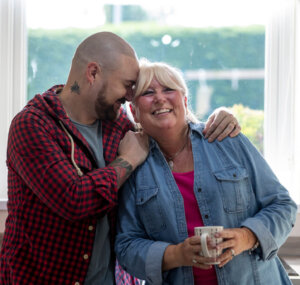
‘There is no friendship, no love, like that of the parent for the child,’ writes Henry Ward Beecher. Yet, for many young people, such parental or carer relationships are strained, fractured, or entirely absent—made even more difficult by imprisonment.
However, our Angel Tree Mother’s Day programme is helping to change this.
This year marks our fifteenth opportunity to run Angel Tree Mother’s Day, helping to restore relationships between young adults in prison and their mothers or significant female carers. It offers these young people the opportunity to send a Mother’s Day gift and personalised message—a chance to express love, gratitude and, in some cases, to reconnect with their mums entirely.
Last year, we sent 621 Mother’s Day gifts on behalf of young adults in prison. That’s 621 sons and daughters reaching out—just like the lost son—and hoping to find a way back.
One young adult shared how Angel Tree Mother’s Day made a difference in his relationship with his mum:
‘She was so surprised. She didn’t expect it at all. She said she forgave me for disappointing her, and my card made her cry. She has been looking at it every day.’
Like the father in Jesus’ parable, this young man’s mother chose to forgive when her son reached out to her. A simple act of love, found within a card, became a catalyst for healing.
And we are hoping to see many more young people begin similar journeys this year.
The father in Jesus’ parable exclaims with joy, ‘We’re going to have a wonderful time! My son is here—given up for dead and now alive! Given up for lost and now found!’ (Luke 15:22–24 MSG)
Imprisonment does not have to be the end of the story for these young people. Angel Tree Mother’s Day offers them a chance to reconnect with their mums or carers and begin repairing relationships that may have been damaged. For some, a Mother’s Day card becomes the first step towards forgiveness—and towards making meaningful changes that lead them away from crime.
St. Thérèse of Lisieux wrote, ‘The loveliest masterpiece of the heart of God is the love of a mother.’ God calls Himself our Father, because He knows the power and significance of parental love—a love that brings reconciliation.

Could you help to restore broken relationships by supporting our Angel Tree Mother’s Day programme this year? Click here to find out more.
This article was first published in our quarterly magazine in:sight. You can sign up to receive our free magazine by post or via email by visiting prisonfellowship.org.uk/subscribe


